Going Up : No 1 - Is My Loft Suitable for Conversion?
The first and most important question every homeowner should ask!
For many homeowners, a loft conversion represents more than additional space. It is an opportunity to reimagine how a home supports the next chapter of life—whether that means creating a calm principal suite, a light-filled studio, or space for a growing family without leaving a much-loved location.
Yet before ideas take shape or designs are drawn, there is one essential question to answer:
Is my loft actually suitable for conversion?
The answer is rarely a simple yes or no. It lies in understanding a combination of structure, proportion, planning context, and—crucially—what quality of space can realistically be achieved.
1. Headroom: The Starting Point
One of the first technical considerations is the existing height of the loft. As a general guide, a minimum of around 2.2–2.4 metres from the top of the existing ceiling joists to the underside of the ridge is desirable.
This allows for new floor structure, insulation, and finishes while still achieving comfortable headroom once complete.
That said, numbers alone do not tell the whole story. Intelligent design can often work creatively with marginal heights—through careful roof alterations, thoughtful layout, or selective structural intervention—where a purely formulaic approach would dismiss the opportunity entirely.
2. Roof Structure: What’s Above You Matters
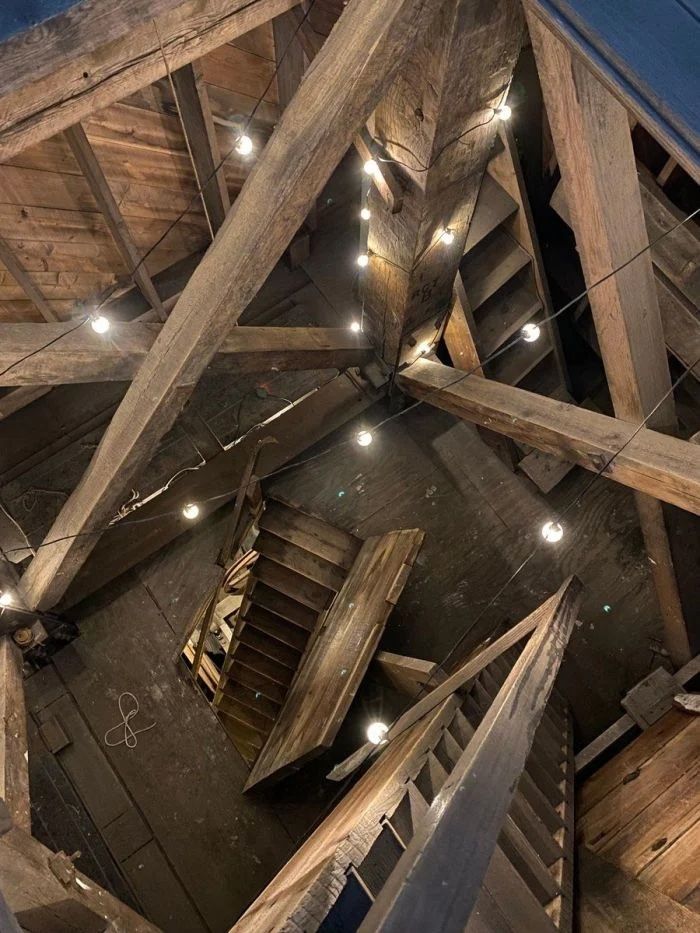
Traditional cut roofs, typically found in pre-1960s homes, tend to be more adaptable. Their open structure often allows greater flexibility in planning the new space.
Modern trussed roofs, by contrast, require more structural modification. This does not make conversion impossible, but it does mean early engineering input is essential to understand cost, feasibility, and long-term performance.
The key is not avoiding complexity—but understanding it early.
3. Floor Strength and Structural Capacity
Lofts were never designed to be lived in. As part of any well-considered conversion, the existing floor structure is assessed and upgraded to meet modern standards for safety, comfort, and acoustic performance.
This is not merely a regulatory requirement; it is fundamental to how the space feels. A properly designed structure ensures solidity underfoot, reduced sound transmission, and a sense that the new rooms truly belong to the house.
4. Access: The Staircase Question
One of the most underestimated aspects of loft suitability is where the staircase will go.
A successful loft conversion feels like a natural extension of the home, not a destination reached by compromise. Stair placement affects existing rooms, circulation, daylight, and the overall flow of the house.
Early design thinking here is critical. When considered properly, the staircase can enhance the home rather than detract from it—often unlocking improvements beyond the loft itself.
5. Planning Context and Constraints
Many loft conversions fall within permitted development, but this should never be assumed. Conservation areas, listed buildings, roof form changes, and street-facing alterations can all influence what is achievable.
Rather than seeing planning as a hurdle, we encourage homeowners to view it as a framework for better design—ensuring the conversion is well proportioned, respectful of its context, and built to last.
6. Light, Outlook and Liveability
A technically compliant loft is not necessarily a successful one. True suitability lies in whether the space will feel light, calm, and comfortable throughout the year.
Roof windows, dormers, orientation, overheating risk, and privacy all play a role. These are design questions, not tick-box exercises—and they are best addressed from the outset, not retrofitted later.
7. Suitability Is About Quality, Not Just Possibility
Perhaps the most important point of all:
Just because a loft can be converted does not always mean it should be—at least not without thoughtful design.
The most successful projects begin with a clear understanding of what the loft could become, how it will be used, and how it will enhance daily life. Suitability is as much about ambition and intent as it is about structure and measurements.
A Considered First Step
Determining whether your loft is suitable is not about quick answers or online calculators. It is about informed assessment, experience, and vision—balancing technical reality with design potential.
When approached properly, this first step lays the foundation for a conversion that feels seamless, generous, and enduring.
Why not book a complimentary discovery call and talk it through with Mark. Together, we’ll explore whether a loft conversion is the right next chapter for your home.